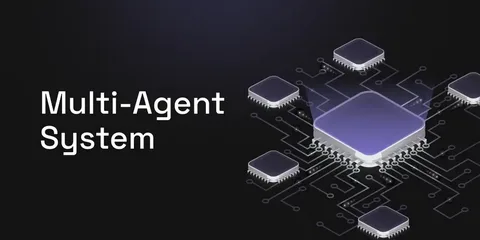
Artificial intelligence is changing how businesses manage tasks, organize information, and improve productivity. One of the most exciting developments in 2026 is the growth of multi-agent AI systems. Instead of depending on a single AI assistant, these systems use multiple specialized agents that work together to complete complex tasks.
Searching for practical multi agent AI workflow examples can help businesses, developers, and freelancers understand how this technology works in real situations.
For example, a marketing workflow can include one AI agent that researches keywords, another that creates content, and a third that checks SEO quality. Each agent has a specific responsibility, but all of them contribute to the same objective.
This approach makes it possible to divide complicated projects into smaller tasks and coordinate their completion. In this guide, we explore seven practical examples, popular frameworks, and the benefits of multi-agent automation.
What Is a Multi-Agent AI Workflow?
A multi-agent AI workflow is a system in which multiple artificial intelligence agents collaborate to complete a task or achieve a shared goal.
Each agent has its own instructions, responsibilities, and sometimes access to different tools or information sources.
For example, an online business might use three agents:
- Research Agent: Collects information and analyzes market trends.
- Writing Agent: Creates content based on research findings.
- Review Agent: Checks quality, accuracy, and formatting.
A workflow controller manages how information moves between these agents.
Unlike a traditional chatbot, which usually handles a request through one assistant, a multi-agent system can distribute work across specialized roles.
Common workflow patterns include sequential execution, parallel processing, agent handoffs, and supervisor-based coordination.
7 Practical Multi Agent AI Workflow Examples in 2026
Here are seven useful examples showing how multiple AI agents can work together.
1. AI Content Creation Workflow
Content creation is one of the most practical applications of multi-agent AI systems.
Businesses, bloggers, and digital marketers can create workflows that handle research, writing, editing, and SEO optimization.
How It Works:
- Research Agent: Finds relevant topics and gathers information.
- Keyword Agent: Identifies target keywords and search intent.
- Writing Agent: Creates the first article draft.
- SEO Agent: Reviews headings, keywords, and readability.
- Editing Agent: Checks grammar and improves content quality.
For example, a website publishing technology articles can use this workflow to prepare content more efficiently.
Each agent handles a different stage, reducing repetitive work and improving organization. Human editors should still verify facts and review the final article before publishing.
2. AI Customer Support Workflow
Customer service teams receive questions about products, payments, orders, and technical problems.
A multi-agent workflow can help organize these requests and direct them to the correct process.
How It Works:
- Classification Agent: Identifies the type of customer inquiry.
- Information Agent: Retrieves relevant product or service information.
- Response Agent: Prepares an appropriate answer.
- Escalation Agent: Identifies issues that require human support.
For example, an online store can use an agent system to classify delivery questions, find order information, and prepare customer responses.
This approach can reduce response times and help support teams manage large numbers of inquiries.
3. AI Market Research Workflow
Market research often requires collecting information from multiple websites, analyzing competitors, and identifying customer trends.
Multi-agent AI workflows can divide these responsibilities among different agents.
How It Works:
- Research Agent: Collects industry information.
- Competitor Agent: Studies competing businesses.
- Data Agent: Organizes available information.
- Analysis Agent: Identifies important trends.
- Reporting Agent: Prepares a structured report.
For example, a startup planning to launch an AI software product can use this workflow to investigate competitors, pricing models, and customer needs.
The final report can help business owners understand opportunities before investing resources.
4. AI Sales and Lead Generation Workflow
Finding potential customers and managing sales opportunities can involve many repetitive activities.
Multi-agent systems can help automate parts of this process.
How It Works:
- Lead Discovery Agent: Finds potential business prospects using approved data sources.
- Qualification Agent: Evaluates prospects against defined criteria.
- Research Agent: Collects relevant company information.
- Email Agent: Prepares personalized outreach drafts.
- CRM Agent: Updates approved customer records.
For example, a B2B company can use agents to identify businesses that match its target market and organize their information in a CRM.
Human approval should remain part of the process before sending outreach messages or making important customer-related decisions.
5. AI Software Development Workflow
Software development is another area where multiple AI agents can collaborate.
Instead of asking one AI assistant to handle an entire development project, different agents can focus on planning, coding, testing, and reviewing.
How It Works:
- Planning Agent: Understands project requirements.
- Coding Agent: Develops selected software components.
- Testing Agent: Checks functionality and identifies errors.
- Review Agent: Examines code quality and security.
- Documentation Agent: Prepares technical documentation.
For example, a development team building a small business application can use specialized agents to support different development stages.
This workflow can improve development productivity, although developers must review generated code and test security before deployment.
6. AI Email and Business Administration Workflow
Businesses receive emails, meeting requests, customer inquiries, and internal updates every day.
A multi-agent workflow can help organize these activities.
How It Works:
- Email Classification Agent: Sorts incoming messages.
- Priority Agent: Identifies urgent communication.
- Summary Agent: Creates short summaries of long conversations.
- Reply Agent: Prepares response drafts.
- Scheduling Agent: Helps identify suitable meeting times.
For example, a business owner can use multiple agents to organize customer emails and prepare responses for approval.
This reduces manual inbox management and helps employees focus on important responsibilities.
7. AI Financial Reporting Workflow
Financial reporting requires accurate information collection, calculations, and analysis.
Multi-agent workflows can assist with organizing these processes.
How It Works:
- Data Collection Agent: Retrieves approved financial records.
- Categorization Agent: Groups transactions.
- Calculation Agent: Performs defined calculations.
- Analysis Agent: Identifies spending patterns.
- Reporting Agent: Creates a financial summary.
For example, a small company can use this workflow to organize monthly expenses and prepare an internal financial report.
However, financial results must be checked by qualified personnel. AI agents should not independently approve payments or make important financial decisions.
Best Frameworks for Building Multi-Agent AI Workflows
Several development frameworks help users create and coordinate multiple AI agents.
| Framework | Best For | Main Capability |
|---|---|---|
| CrewAI | Role-based agents | Agent collaboration |
| LangGraph | Complex workflows | Graph-based orchestration |
| Microsoft Agent Framework | Business applications | Multi-agent coordination |
| AutoGen Studio | Prototyping | Visual agent teams |
| Semantic Kernel | AI application development | Agent integration |
CrewAI: Useful for creating teams of agents with specific roles, tasks, and responsibilities.
LangGraph: Helps developers create stateful workflows with conditional steps, routing, and agent coordination.
Microsoft Agent Framework: Provides production-oriented orchestration patterns, including sequential, concurrent, handoff, and group collaboration workflows.
AutoGen Studio: Historically provided a visual environment for prototyping agent teams. Microsoft has since introduced Agent Framework as the production-oriented successor to AutoGen, so new projects should evaluate the newer framework.
Semantic Kernel: Helps developers integrate AI capabilities into existing applications and business systems.
Sequential vs Parallel Multi-Agent Workflows
Two common approaches are sequential and parallel execution.
| Feature | Sequential Workflow | Parallel Workflow |
|---|---|---|
| Execution | One agent after another | Multiple agents simultaneously |
| Speed | Depends on each step | Can reduce waiting time |
| Best For | Ordered tasks | Independent tasks |
| Example | Research, then writing | Researching multiple competitors |
| Coordination | Step-by-step | Result aggregation |
For example, an article-writing workflow should usually follow a sequential process because writing depends on completed research.
However, researching five independent competitors can happen in parallel before another agent combines the findings.
How to Build a Multi-Agent AI Workflow
Creating a useful multi-agent system requires careful planning.
Step 1: Define Your Goal
Choose one clear objective, such as creating reports, organizing customer inquiries, or automating content research.
Step 2: Divide the Work
Break the main objective into smaller tasks. Each task should have a clear responsibility.
Step 3: Create Specialized Agents
Give each agent a specific role, instructions, and access to the tools it needs.
Step 4: Select a Workflow Pattern
Choose sequential, parallel, or supervisor-based coordination depending on how the tasks depend on each other.
Step 5: Connect Tools and Data
Connect approved applications, databases, APIs, and information sources.
Step 6: Test the Complete Workflow
Check whether agents communicate correctly, share accurate information, and complete their assigned responsibilities.
Step 7: Monitor and Improve
Track errors, execution costs, and output quality. Improve agent instructions and workflow logic when necessary.
Benefits of Multi-Agent AI Workflows
Multi-agent automation offers several advantages.
1. Better Task Distribution: Complex projects can be divided among specialized agents.
2. Improved Productivity: Multiple agents can handle different responsibilities without requiring constant manual coordination.
3. Faster Processing: Independent tasks can run simultaneously.
4. Flexible Automation: Businesses can create workflows for marketing, sales, research, and administration.
5. Specialized Performance: Agents can use different instructions and tools for specific tasks.
6. Easier Workflow Expansion: Additional agents can be introduced when a project requires new capabilities.
Challenges and Limitations of Multi-Agent Systems
Despite their advantages, multi-agent workflows also introduce challenges.
- Higher Costs: Multiple agents may increase AI model usage and infrastructure expenses.
- Coordination Problems: Agents can misunderstand instructions or produce conflicting results.
- Incorrect Information: One agent’s mistake can affect later workflow stages.
- Security Risks: Connected tools may expose sensitive business information.
- Complex Management: Large workflows can become difficult to monitor.
- Unnecessary Automation: Some simple tasks do not require multiple agents.
The best approach is to begin with two or three agents and expand only when there is a clear benefit.
Frequently Asked Questions (FAQs)
1. What Are Multi Agent AI Workflow Examples?
They are practical applications where multiple AI agents collaborate to complete tasks such as content creation, customer support, market research, sales automation, and software development.
2. Which Framework Is Best for Multi-Agent AI Workflows?
CrewAI is useful for role-based agent teams, LangGraph offers advanced workflow control, and Microsoft Agent Framework supports production-oriented orchestration.
3. Can Multiple AI Agents Work Together?
Yes. Agents can communicate through shared information, task delegation, message passing, and structured workflows.
4. Are Multi-Agent AI Workflows Expensive?
Costs depend on the number of agents, model selection, task complexity, and infrastructure. Simple workflows can be relatively affordable.
5. Can Beginners Build Multi-Agent AI Workflows?
Yes. Some platforms offer visual interfaces and templates, while development frameworks provide more flexibility for technical users.
6. Are Multi-Agent Systems Better Than Single AI Agents?
Not always. Multi-agent systems are useful for complex tasks involving different responsibilities. A single agent is often more efficient for simple activities.
7. What Industries Use Multi-Agent AI Systems?
Industries such as technology, marketing, finance, education, healthcare administration, and customer service can benefit from multi-agent automation.
Final Thoughts
Multi agent AI workflow examples demonstrate how specialized artificial intelligence agents can collaborate to complete complex tasks. From content creation and customer support to software development and market research, these systems offer new opportunities for business automation.
Frameworks such as CrewAI, LangGraph, and Microsoft Agent Framework provide useful ways to build and coordinate AI agents.
The smartest approach is to identify a repetitive business problem, divide it into manageable tasks, and assign each responsibility to the right agent.
Start small, test the results, and introduce additional agents only when they improve efficiency. With proper planning and human supervision, multi-agent AI workflows can become valuable tools for modern businesses.