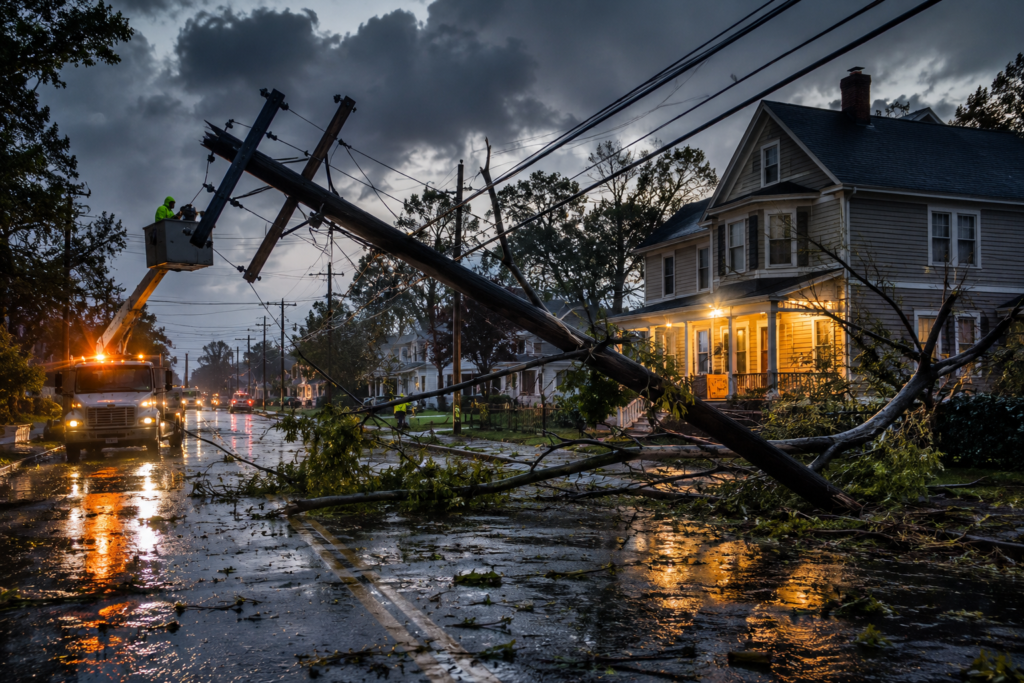
Thanksgiving storm power outages. A powerful storm swept across parts of the United States during the Thanksgiving holiday, bringing strong winds, heavy rainfall, coastal flooding, and widespread electricity disruptions. The Thanksgiving storm power outages affected hundreds of thousands of homes and businesses across the East Coast, creating difficult conditions for families celebrating the holiday and travelers trying to reach their destinations.
The storm caused trees and power lines to fall as wind gusts reached up to 70 miles per hour in some areas. Utility companies worked to assess damage and restore electricity, while local authorities warned residents about dangerous weather conditions.
The severe weather also disrupted transportation, affected airports, and forced organizers to postpone a major Thanksgiving event in New York City. The storm’s timing made the situation particularly difficult because Thanksgiving is one of the busiest travel and family gathering periods in the United States.
Hundreds of Thousands of Customers Lose Electricity
The storm caused major electricity disruptions across several East Coast states, with Virginia and Maryland experiencing particularly significant outages.
According to reported outage figures on Thursday afternoon, nearly 200,000 homes and businesses in Virginia were without power, while approximately 177,000 customers in Maryland were affected. Pennsylvania, New Jersey, and North Carolina also reported tens of thousands of electricity disruptions.
These Thanksgiving storm power outages were caused primarily by strong winds, falling trees, and damage to electrical infrastructure.
Power companies faced difficult conditions as crews attempted to inspect damaged equipment and safely restore electricity. Wet ground caused by heavy rainfall also increased the risk of trees falling onto power lines.
For many residents, the outages meant losing electricity during holiday preparations, including cooking, heating, lighting, and other household activities.
Strong Winds Reach Up to 70 Miles Per Hour
Strong winds were among the most damaging features of the storm. Wind gusts reaching approximately 50 to 70 mph were reported or forecast across portions of Virginia, Maryland, Delaware, New Jersey, New York, and coastal New England.
These powerful winds created dangerous conditions for motorists, pedestrians, and people living near trees or electrical infrastructure.
In New York City, officials reported that winds intensified during Thursday afternoon, with gusts reaching 56 mph at LaGuardia Airport.
The Thanksgiving storm power outages became a major concern as strong winds combined with saturated soil. When the ground becomes soaked following heavy rain, trees can become more vulnerable to being uprooted, especially when strong winds push against their branches and trunks.
Falling trees can damage electricity poles, transformers, cables, and other essential infrastructure. Even a single fallen tree can interrupt electricity for hundreds of households depending on the location and extent of the damage.
Weather conditions also made it difficult for emergency workers to assess damage immediately in some areas.
Heavy Rain Causes Coastal Flooding
Along with damaging winds, the storm brought heavy rainfall to parts of the East Coast.
Coastal communities faced additional risks because strong onshore winds pushed water toward shorelines. The combination of wind-driven water and high tides contributed to flooding in low-lying locations.
Flooding can create dangerous conditions for drivers, residents, and emergency crews. Streets may become temporarily inaccessible, while flooded areas can hide hazards such as damaged electrical equipment, debris, and unstable road surfaces.
Residents in coastal areas were advised to pay attention to weather alerts and avoid driving through flooded roads.
The storm demonstrated how multiple weather hazards can develop at the same time. Heavy rainfall, coastal flooding, wind damage, and electricity disruptions can make emergency response operations more complicated.
Thanksgiving Travel Disrupted Across the United States
Thanksgiving is one of the busiest travel periods in the United States, and the storm created additional problems for passengers travelling by air.
More than 400 flights were canceled and approximately 1,600 flights were delayed by early Thursday afternoon, according to FlightAware figures reported by Reuters.
Major airports in the Washington and New York City areas were among those experiencing significant disruptions.
The storm affected passengers travelling to visit relatives, attend holiday celebrations, or return home. Airport delays can also create additional complications because passengers may miss connecting flights or face longer waiting times.
The Thanksgiving storm power outages and severe weather conditions occurred alongside transportation disruptions, making the holiday difficult for many families.
Airlines were required to adjust schedules as weather conditions affected aircraft operations, airport facilities, and flight routes.
Passengers were encouraged to check flight status information and airline updates before heading to airports.
Macy’s Thanksgiving Day Parade Postponed Due to Severe Weather
The storm also affected one of America’s most recognizable Thanksgiving traditions. Organizers postponed the 100th edition of the Macy’s Thanksgiving Day Parade in New York City because of the dangerous weather conditions.
The postponement marked an unusual moment for the annual celebration, which attracts large crowds and millions of television viewers.
Strong winds can create safety risks for parade participants, spectators, balloons, floats, temporary structures, and event staff. Heavy rain and flooding conditions can also make streets more dangerous.
The decision to postpone the parade highlighted how severe weather can affect large public events, even when organizers have spent months preparing.
The weather situation in New York was part of a broader coastal storm that affected several states, including areas experiencing electricity disruptions and travel delays.
Why Power Outages Become More Dangerous During Holidays
Electricity disruptions can be especially difficult during major holidays when families depend on power for cooking, heating, communication, and entertainment.
Thanksgiving celebrations often involve preparing large meals, using kitchen appliances, keeping food refrigerated, and gathering with family members. When electricity suddenly disappears, many of these activities become difficult.
The Thanksgiving storm power outages also raised concerns about food safety, especially for households experiencing extended interruptions.
Refrigerators and freezers can lose their ability to maintain safe temperatures if outages last too long. Residents may also depend on electricity for heating systems, medical equipment, internet connections, and charging mobile phones.
During severe weather, people are generally encouraged to keep emergency supplies available, including flashlights, batteries, bottled water, and essential medications.
Portable generators should only be operated outdoors and away from windows and doors because carbon monoxide can be deadly.
How Utility Companies Respond to Storm Damage
Electricity providers generally begin restoration operations by identifying the most serious damage affecting their networks.
Their work may include:
-
Inspecting damaged power lines and electrical poles.
-
Removing trees and debris from dangerous locations.
-
Repairing transformers and damaged equipment.
-
Restoring electricity to critical facilities.
-
Reconnecting affected residential and commercial customers.
Utility crews often prioritize repairs involving public safety, hospitals, emergency services, and infrastructure serving large numbers of customers.
However, restoration times can vary significantly depending on the amount of damage, weather conditions, road access, and available repair crews.
The Thanksgiving storm power outages required utilities to respond to damage across multiple communities rather than focusing on a single location.
Residents should avoid approaching fallen power lines because they may remain energized even when they appear damaged or inactive.
Weather Forecasts and Emergency Warnings Remain Important
Severe storms can develop quickly, and weather conditions may change throughout the day. Forecasting systems, emergency alerts, and local weather services help residents prepare for dangerous conditions.
During major storms, authorities may issue warnings related to damaging winds, flooding, coastal conditions, and hazardous travel.
The Thanksgiving storm power outages demonstrate the importance of preparation before severe weather arrives. Residents can reduce some risks by securing outdoor objects, charging electronic devices, preparing emergency lighting, and keeping essential supplies available.
People living in areas vulnerable to flooding should also consider evacuation instructions from local authorities when necessary.
Weather agencies continue monitoring storm systems to provide information that helps communities make safer decisions.
Conclusion
The powerful Thanksgiving storm power outages disrupted holiday celebrations across the US East Coast, causing widespread electricity outages, travel delays, heavy rainfall, coastal flooding, and damaging winds.
Virginia and Maryland experienced particularly significant electricity disruptions, while other states also reported outages. The storm affected airports and led to the postponement of the Macy’s Thanksgiving Day Parade in New York City.
The Thanksgiving storm power outages highlight how severe weather can affect communities during important holidays. Falling trees, damaged power lines, flooding, and transportation disruptions can create challenges for residents, utility companies, and emergency services.
As repair crews work to restore electricity and communities recover from storm damage, staying informed through official weather alerts and local emergency updates remains essential.